
How to Build an AI-Powered Fashion Lifestyle App Using Flutter and FlutterFlow in the Middle East: 2026 Guide
Fashion Lifestyle App Using AI, Flutter and Flutterflow in/for Middle East (2026 Guide)
Introduction The Middle East is emerging as a vibrant and rapidly evolving market for mobile fashion and lifestyle applications. With high smartphone penetration, strong mobile commerce adoption, and a culturally rich fashion scene spanning from...
· · Virtuous Techlogic · 8 min read
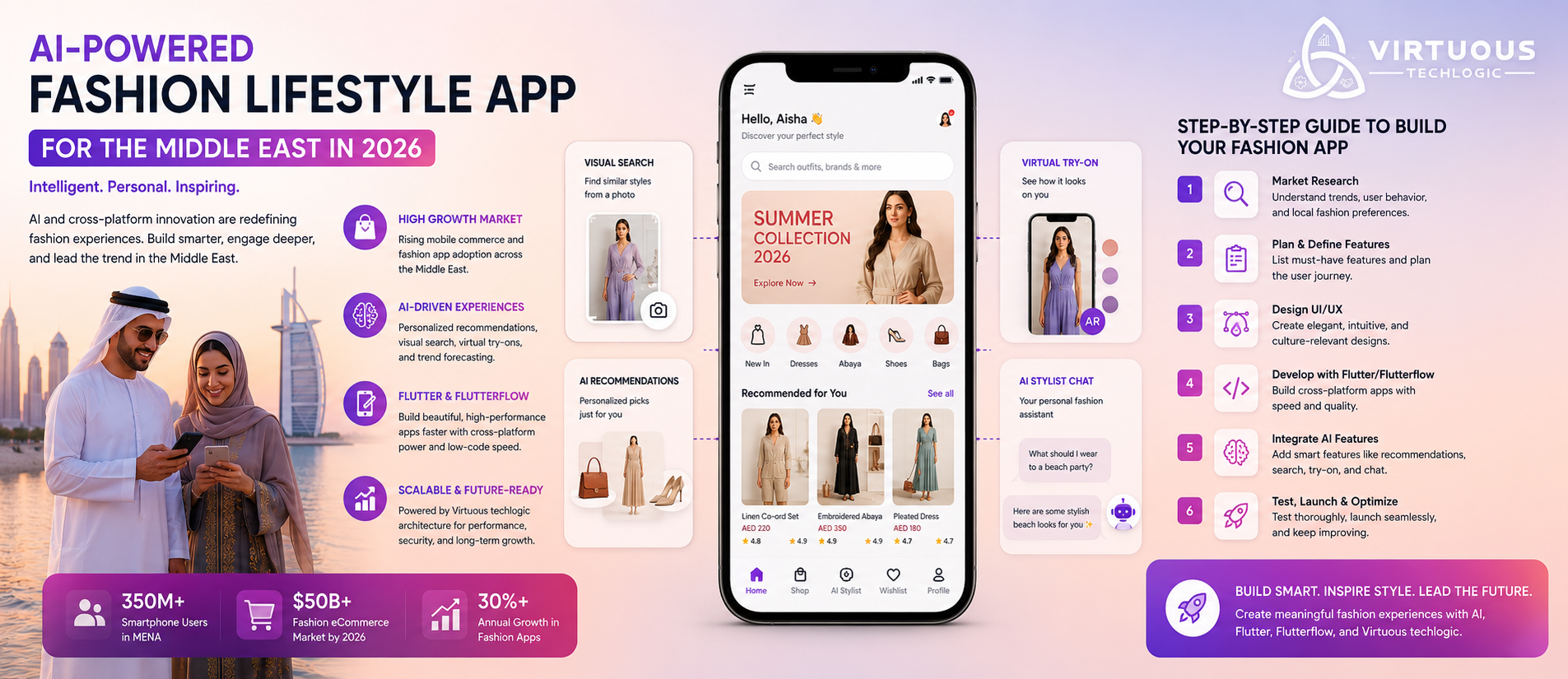
Introduction
The Middle East is emerging as a vibrant and rapidly evolving market for mobile fashion and lifestyle applications. With high smartphone penetration, strong mobile commerce adoption, and a culturally rich fashion scene spanning from luxury couture in Dubai to casual streetwear in Cairo the region presents a powerful opportunity for innovators in 2026.
Consumers today expect highly personalized, intelligent experiences not just catalogs of products. AI (artificial intelligence) is driving personalization, trend prediction, visual search, and virtual try‑ons that create deeply engaging fashion experiences. At the same time, Flutter and Flutterflow enable developers to build robust, cross‑platform apps faster and more efficiently than ever before. Using Virtuous techlogic as your foundational architecture ensures scalability, performance, and long‑term success.
In this guide, we’ll walk through everything you need to know about building an AI‑powered fashion lifestyle app for the Middle East in 2026 from market dynamics and AI capabilities to development steps, monetization, and future trends.
Why the Middle East Is a Strategic Market for Fashion Apps in 2026
The Middle East has become a hotspot for mobile commerce and fashion technology. In countries like the UAE, Saudi Arabia, and Egypt, smartphone adoption and app usage are significantly high, and users are turning to mobile apps not just for shopping but for fashion discovery and lifestyle inspiration.
Several regional e‑commerce apps are already thriving, with fashion and lifestyle categories among the most downloaded and used apps. These trends show the growing appetite for mobile experiences combining shopping, personalized recommendations, and curated fashion content making the Middle East a compelling region to target in 2026.
AI: The Heart of Next‑Gen Fashion Apps
Artificial Intelligence is no longer a futuristic concept by 2026, it’s core to delivering compelling fashion experiences.
Key AI Capabilities for Fashion Apps
- Personalized Recommendations: AI analyzes user behavior, preferences, and trends to recommend styles that feel tailor‑made for each user.
- Visual Search: Users can upload or take photos to find similar outfits instantly a powerful way to bridge inspiration and discovery.
- Virtual Try‑Ons: Combining AI with AR allows users to see how clothes might look on them before buying reducing returns and boosting confidence.
- Trend Forecasting: AI models can predict fashion trends based on data from global and regional sources especially valuable in culturally diverse markets like the Middle East.
- Conversational Voice & Chat Interfaces: Users can interact with the app via voice or chat to discover outfits or get styling advice.
According to industry forecasts, AI in fashion is on track for massive growth beyond 2026, indicating that brands that adopt AI early will be better positioned to lead.
Why Choose Flutter for Fashion App Development
Flutter, Google’s UI toolkit, continues to be one of the top frameworks for app development in 2026. It’s widely adopted for its ability to build high‑performance cross‑platform applications efficiently a key advantage in competitive markets like the Middle East.
Flutter Benefits for Fashion Apps
- Cross‑Platform Compatibility: Build for iOS and Android from the same codebase reducing costs and time.
- Rich UI & Animation Support: Fashion apps thrive on beautiful visuals, smooth transitions, and elegant layouts all of which Flutter excels at.
- Fast Development Cycles: Features like “hot reload” let developers iterate quickly.
- Strong Ecosystem: Integration with AI services, backend systems, and animation libraries keeps development flexible and powerful.
In a region where app quality affects user perception and engagement, Flutter’s capability to deliver consistent performance and design excellence makes it a smart choice.
Flutterflow: Low‑Code Innovation for Rapid Delivery
While Flutter offers robust control and performance, Flutterflow accelerates the development process with visual builders and low‑code workflows. This is especially useful for startups and teams looking to launch quickly or validate ideas before full‑scale development.
Flutterflow Advantages
- Drag‑and‑Drop UI Design: Non‑developers can prototype and iterate without writing every line of code.
- API Integration: Seamlessly connect AI services or backend systems for personalized features.
- Instant Preview: Test and revise components instantly.
- Generative AI Assistance: Flutterflow’s new AI tools can generate UI components and layouts from natural language prompts speeding up design cycles and ensuring a polished final product.
With Flutterflow, you can start with an MVP get user feedback faster and refine your app into a full‑featured fashion platform.
Blending AI Into Your Flutter/Flutterflow App
Integrating AI into your app involves connecting intelligent services (like recommendation engines, visual search tools, or conversational assistants) through APIs or SDKs. These features enhance user experiences by making the app feel responsive, personal, and smart.
For example:
- Visual Search & Try‑Ons: Users upload an image and instantly get similar fashion picks.
- AI Chatbot Assistants: Integrated chat helps users find styles, answer questions, and offer fashion tips.
- Voice Search: Users interact through natural language a growing trend in app interfaces by 2026.
Using Virtuous techlogic, you can structure these AI modules cleanly and ensure they scale as your user base grows preventing performance issues while enhancing personalization.
Step‑by‑Step Guide to Building Your Fashion Lifestyle App
1. Conduct Market Research
Understand the fashion preferences and mobile habits of Middle Eastern users. Investigate patterns in countries like UAE, Saudi Arabia, Egypt, and Qatar to tailor features accordingly.
2. Define Core Features
Decide on essential features such as AI styling recommendations, visual search, voice interactions, trend feeds, and social sharing.
3. Design UX & UI
Craft culturally relevant designs consider preferences around color, navigation flows, and language options (Arabic, English, etc.).
4. Build With Flutter & Flutterflow
Use Flutter for core functionality and performance‑critical components; use Flutterflow to accelerate initial builds and prototypes.
5. Integrate AI
Connect powerful AI tools for personalization, visuals, and predictive trends. Use external APIs or custom models hosted in scalable environments with Virtuous TechLogic.
6. Localize and Test
Ensure language support, right‑to‑left layouts where needed, and performance across devices popular in the Middle East.
7. Launch & Optimize
Deploy to App Store and Play Store with localized metadata. Continuously analyze user behavior to refine AI recommendations and features.
Monetization Strategies in the Middle East
In 2026, fashion apps succeed when they combine intelligent features with smart revenue models:
1. Premium Subscriptions
Offer tiered plans for exclusive styling advice, early access to collections, or advanced AI features.
2. Affiliate Marketing
Partner with top regional and global fashion brands, AI can recommend products users are likely to buy.
3. In‑App Purchases
Sell virtual wardrobe items, fashion bundles, or premium try‑on filters.
4. Targeted Advertising
Use AI to serve ads tailored to users’ tastes without disrupting the experience.
These strategies help you balance revenue and user engagement effectively.
Challenges & Solutions
Localization Complexity
The Middle East is culturally diverse, with language support (including Arabic and English), payment methods, and fashion norms that vary. Prioritize adaptive localization.
Data Privacy
Ensure your app complies with regional data protection standards by using transparent data practices.
Performance Optimization
AI services and rich visuals increase load. Virtuous TechLogic supports performance monitoring and scalable backend services to handle peak usage.
Future Trends Beyond 2026
Looking ahead, fashion apps will likely incorporate:
- AR glasses and mixed reality experiences
- Web3 fashion elements and digital collectibles
- Real‑time AI that predicts trends on the fly
- Voice‑first interfaces as a standard UX pattern
Apps that blend immersive tech with intelligent personalization will set the bar for user engagement.
Conclusion
Building a fashion lifestyle app for the Middle East in 2026 requires a powerful blend of AI, Flutter, and Flutterflow and a thoughtful approach to culture, design, and monetization. With the foundation of Virtuous TechLogic, you can deliver a future‑ready app that meets the expectations of fashion‑savvy users who demand smart, stylish, and intuitive experiences.
Frequently Asked Questions
Build Your App with Virtuous Techlogic
Book a Free ConsultationTrusted by clients across Clutch and Upwork
Want proof before starting? View our client reviews and agency profiles on Clutch and Upwork.