
Why Marketing Is Essential for Business Growth: Types, Benefits and Strategies
Is Marketing Essential for Your Company's Success?
Marketing plays a crucial role in the success of a company. It's more than just advertising or promotion – it involves understanding what customers want, offering valuable products or services, and building strong connections. Here are some key...
· · Written by Virtuous Techlogic · 4 min read
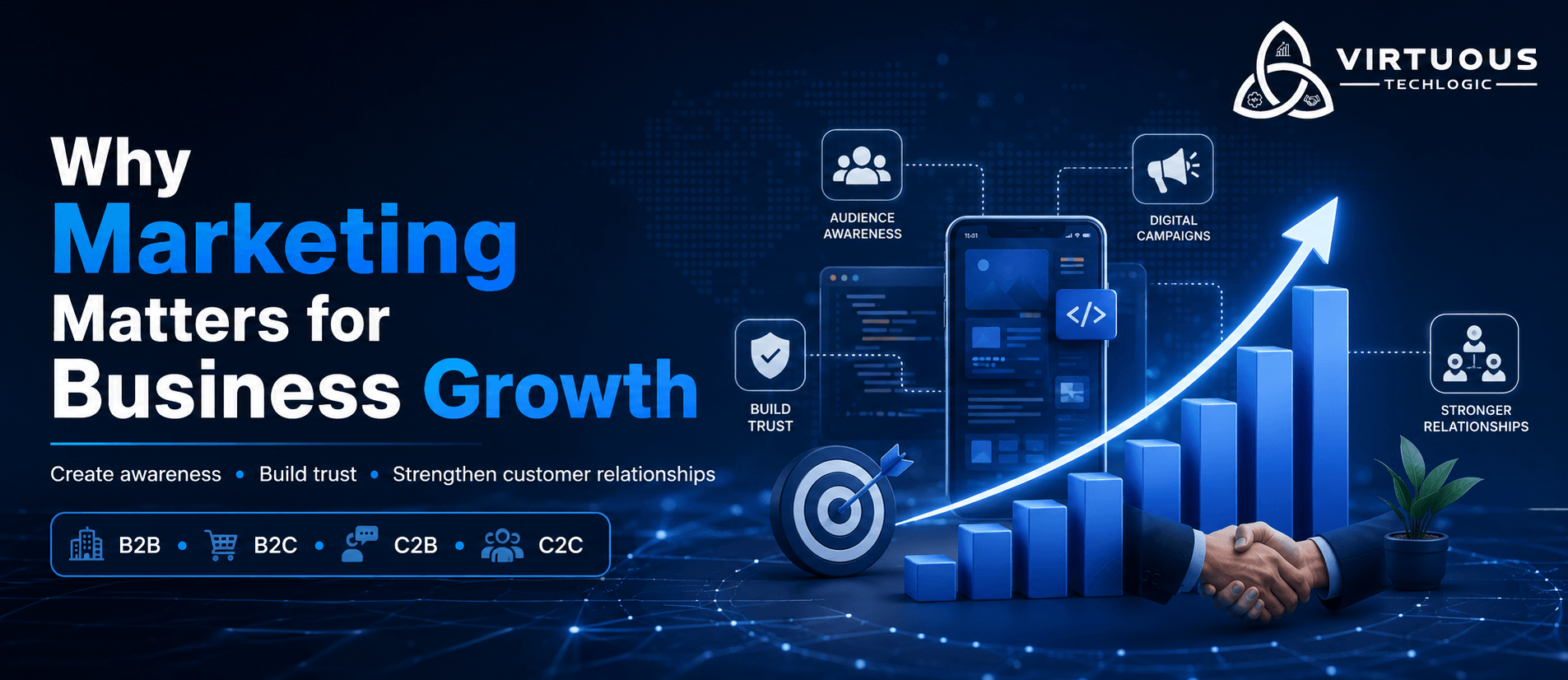
Marketing plays a crucial role in the success of a company. It's more than just advertising or promotion – it involves understanding what customers want, offering valuable products or services, and building strong connections. Here are some key reasons why marketing is essential for business growth:
1. Creating Awareness and Generating Demand : Effective marketing strategies make target audiences aware of a company's offerings and generate interest in them. This is done through brand visibility and customer acquisition. For example, let's take a look at our startup app development company. With strategic marketing efforts, we can make potential clients aware of our services and create a demand for our app development skills.
2. Building Trust and Credibility : Clear messaging and positive customer experiences build trust for a company. Creating a good reputation and earning customer trust are important parts of marketing that lead to long-term success. By delivering on our promises and exceeding customer expectations, we can establish ourselves as reliable partners. This trust can be built through various marketing activities such as online reviews, testimonials, case studies, and thought leadership content.
3. Facilitating Customer Relationships : Continuous marketing plays a vital role in nurturing long-term connections with customers, which leads to repeat business and advocacy. Through strategies like personalized communication, loyalty programs, and targeted campaigns, companies can encourage loyalty among their customers. For example, by keeping our existing clients engaged through newsletters, exclusive offers, and follow-up communications, we can strengthen our relationship with them and encourage repeat business.
Marketing involves much more than just these three things; it includes a wide range of activities that drive business growth. By understanding what customers need, creating compelling value propositions, communicating effectively, and staying up-to-date with market trends, companies can stay competitive and achieve their goals.
Understanding Different Types of Marketing Strategies
Marketing strategies can vary depending on the target market segments or participant types. By categorizing these strategies, businesses can effectively tailor their marketing efforts to reach and engage their desired audience. Let's explore each type of marketing strategy in detail:
1. B2B Marketing:
- B2B marketing focuses on selling products or services to other businesses rather than individual consumers.
- This type of marketing is often relationship-driven, as it involves building long-term partnerships and trust with other businesses.
- Examples of B2B marketing approaches include attending industry trade shows, participating in business networks, and creating targeted content for specific industries.
- To implement B2B marketing effectively, companies should focus on demonstrating expertise, providing customized solutions, and establishing strong professional relationships.
2. B2C Marketing :
- B2C marketing targets individual consumers and aims to influence their purchasing decisions.
- Mass targeting is often used in B2C marketing to reach a large audience through channels such as TV commercials, radio ads, and billboards.
- Emotional appeal plays a significant role in this type of marketing by connecting with consumers' desires, aspirations, or pain points.
- Successful B2C marketing campaigns often create memorable experiences and evoke emotions that resonate with the target audience.
3. C2B Marketing :
- C2B marketing revolves around empowering consumers to create value for businesses.
- User-generated content (UGC) is a key aspect of C2B marketing. It involves encouraging customers to share their experiences, reviews, or testimonials about a product or service.
- Personalization is crucial in C2B marketing as it allows businesses to tailor their offerings based on individual consumer preferences and behaviors.
- Examples of C2B marketing include influencer marketing, where individuals with a significant social media following endorse products or services, and personalized email marketing campaigns.
4. C2C Marketing :
- C2C marketing focuses on facilitating transactions between individual consumers through online platforms.
- Peer influence plays a vital role in this type of marketing. Positive reviews, ratings, and recommendations from fellow consumers can significantly impact purchasing decisions.
- Online platforms such as social media marketplaces, classified websites, or review websites provide avenues for C2C marketing.
- Businesses can leverage C2C marketing by actively engaging with customers on these platforms, encouraging user-generated content, and fostering a sense of community.
For more details about our comapany visit our website: virtuoustechlogic.com
You can also visit Fiverr account for more details: https://www.fiverr.com/s/BRRp2j1
Frequently Asked Questions
Build Your App with Virtuous Techlogic
Book a Free ConsultationTrusted by clients across Clutch and Upwork
Want proof before starting? View our client reviews and agency profiles on Clutch and Upwork.