
The Evolution of Android OS: From Android 1.0 to Modern Android
The Evolution of Android OS: A Journey Through Innovation
The Android OS is a crucial part of the tech industry, completely changing how we use mobile devices and shaping the digital world we live in today. In this article, we'll take a close look at the fascinating history of the Android OS, exploring how...
· · Written by Virtuous Techlogic · 5 min read
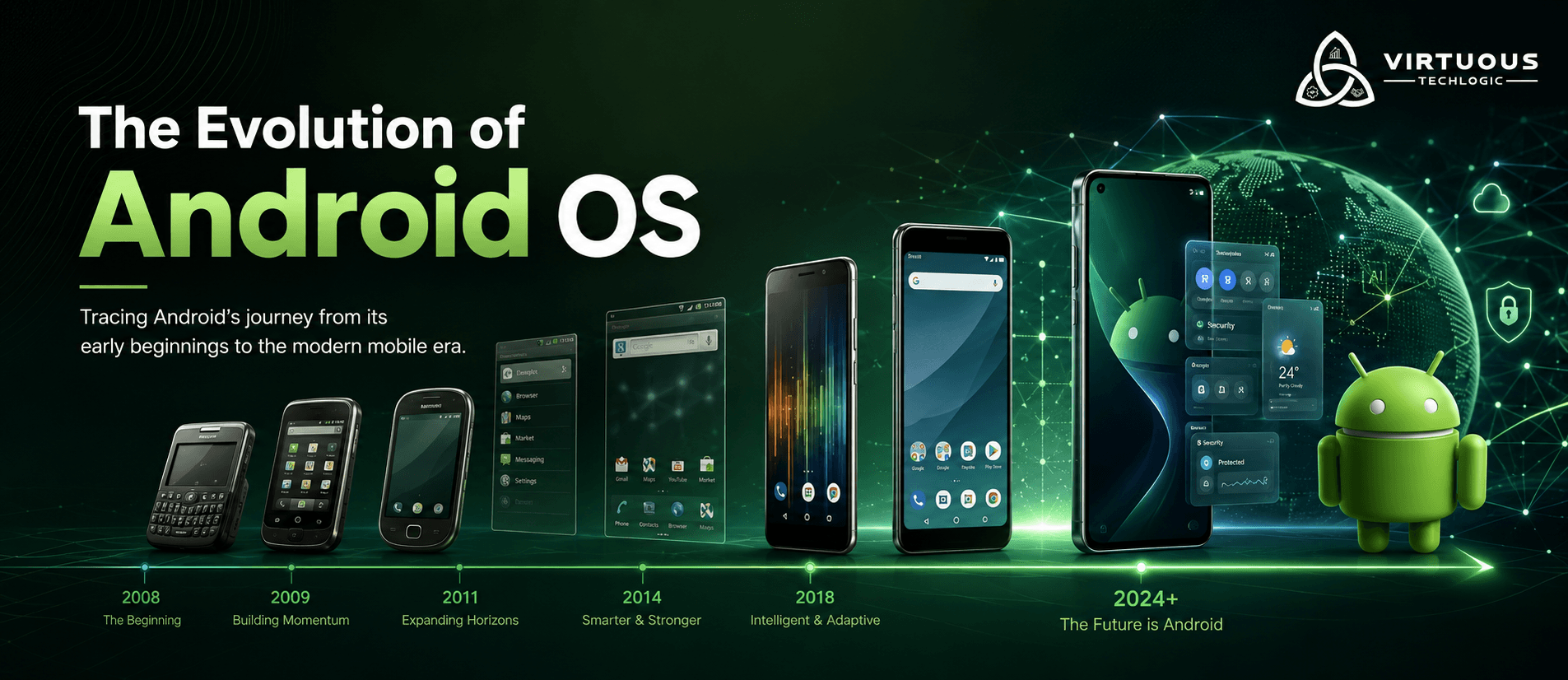
The Android OS is a crucial part of the tech industry, completely changing how we use mobile devices and shaping the digital world we live in today. In this article, we'll take a close look at the fascinating history of the Android OS, exploring how it has continuously changed and improved to meet the needs of users and developers.
We'll cover everything from the very beginning of Android to where it stands today, highlighting key moments that have shaped its development. This journey through time will show us how Android has not only grown but also pushed the boundaries of innovation in mobile technology.
By looking back, we can better understand and appreciate the resilience and creativity that have made Android such a dominant force in the industry. So, let's dive into this informative adventure and discover the incredible story behind the evolution of the Android OS!
The Early Days: From Inception to Google Acquisition
The Android operating system had its humble beginnings with the establishment of Android Inc. in 2003. Andy Rubin, Rich Miner, Nick Sears, and Chris White founded the company with the goal of creating an advanced operating system for digital cameras. However, as technology progressed, their vision for Android also evolved.
In 2005, Google acquired Android Inc., which was a turning point for the OS. This acquisition opened doors for Android to become a flexible platform that would later transform the mobile industry.
The Release of Android 1.0 Beta and Its Impact
A significant milestone in this journey was the release of Android 1.0 Beta in 2007. This marked the introduction of the first commercially available Android-powered device, the HTC Dream (T-Mobile G1). The release of this beta version laid the groundwork for what would become a dominant force in the mobile OS market.
Throughout these early stages, Android’s trajectory was set on a path of innovation and adaptability, with Google's resources propelling it toward widespread adoption and continuous evolution.
Tracing the Major Advancements: A Chronological Look at Different Android Versions:
The evolution of the Android OS is marked by a series of significant advancements and innovations that have shaped the user experience and set new standards for mobile technology. Let's delve into the chronological progression of Android versions and explore the key milestones that have defined its journey.
Versioning Scheme and Naming Conventions
Android OS versions are characterized by a unique naming convention, with each version named after a delectable treat or dessert. This approach not only adds an element of fun and anticipation for users but also reflects the platform's commitment to offering a diverse and flavorful experience. The versioning scheme follows an alphabetical order, with each iteration introducing a fresh set of features and improvements.
### **Unveiling Key Features and Notable Improvements**
1. Cupcake to Gingerbread
The early versions of Android, including Cupcake, Donut, Eclair, and Froyo, laid the foundation for essential features such as widgets, multi-tasking, and improved camera support. With the introduction of Gingerbread, Android saw significant performance enhancements and refined user interface elements.
2. Jelly Bean to Oreo
Jelly Bean brought forth expanded notifications, Google Now integration, and Project Butter for smoother performance. KitKat focused on optimization for lower-end devices, while Lollipop introduced Material Design for a more visually appealing interface. Marshmallow refined app permissions and introduced Google Now on Tap. Nougat emphasized productivity with split-screen multitasking and Quick Settings customization. Oreo placed a premium on battery life with background app limitations and introduced picture-in-picture mode.
3. Pie to Present
Android Pie marked a shift towards digital wellbeing by introducing features like Dashboard, App Timer, and Wind Down. It also emphasized AI capabilities through Adaptive Battery and Adaptive Brightness functionalities. The subsequent iterations, including Android 11 and the upcoming Android 12, have continued to refine these features while embracing modern design elements and enhanced security protocols.
Spotlight on User Experience: Honeycomb to Nougat
The period from Honeycomb to Nougat witnessed a concerted effort by Android to prioritize user experience enhancements through iterative updates:
- Honeycomb (Android 3.x): Introduced a tablet-centric UI design tailored for larger screens.
- Ice Cream Sandwich (Android 4.0): Unified the smartphone and tablet interfaces while introducing features like Face Unlock.
- Jelly Bean (Android 4.1-4.3): Enhanced responsiveness through Project Butter and introduced features like Google Now.
- KitKat (Android 4.4): Focused on optimizing memory usage for smoother performance across devices.
- Lollipop (Android 5.x): Introduced Material Design for a more intuitive interface experience.
- Marshmallow (Android 6.0): Refined app permissions management system for enhanced privacy control.
- Nougat (Android 7.x) : Prioritized productivity with split-screen multitasking and improved notifications.
Throughout these iterations, our company 'Virtuous Techlogic' has been at the forefront of leveraging these advancements to create user-centric applications that align with evolving consumer preferences.
As we continue our exploration of the Android OS journey, it becomes evident that each iteration has contributed to shaping a more refined, intuitive, and feature-rich platform that continues to push boundaries in mobile technology innovation.
The story of Android's evolution is far from over; it's an ongoing narrative of adaptation, innovation, and user-centric design that continues to inspire developers worldwide.
For more details about our comapany visit our website: virtuoustechlogic.com
You can also visit Fiverr account for more details: https://www.fiverr.com/s/BRRp2j1
Frequently Asked Questions
Build Your App with Virtuous Techlogic
Book a Free ConsultationTrusted by clients across Clutch and Upwork
Want proof before starting? View our client reviews and agency profiles on Clutch and Upwork.