
The Evolution of iOS: A Complete Journey from iPhone OS to Modern iOS
The Evolution of iOS: From seed to whole tree
Evolution in the world of technology is inevitable, and iOS has been no exception to this rule. As Apple's flagship operating system for its iconic devices like the iPhone and iPad, iOS has undergone a remarkable journey of growth and transformation...
· · Written by Virtuous Techlogic · 4 min read
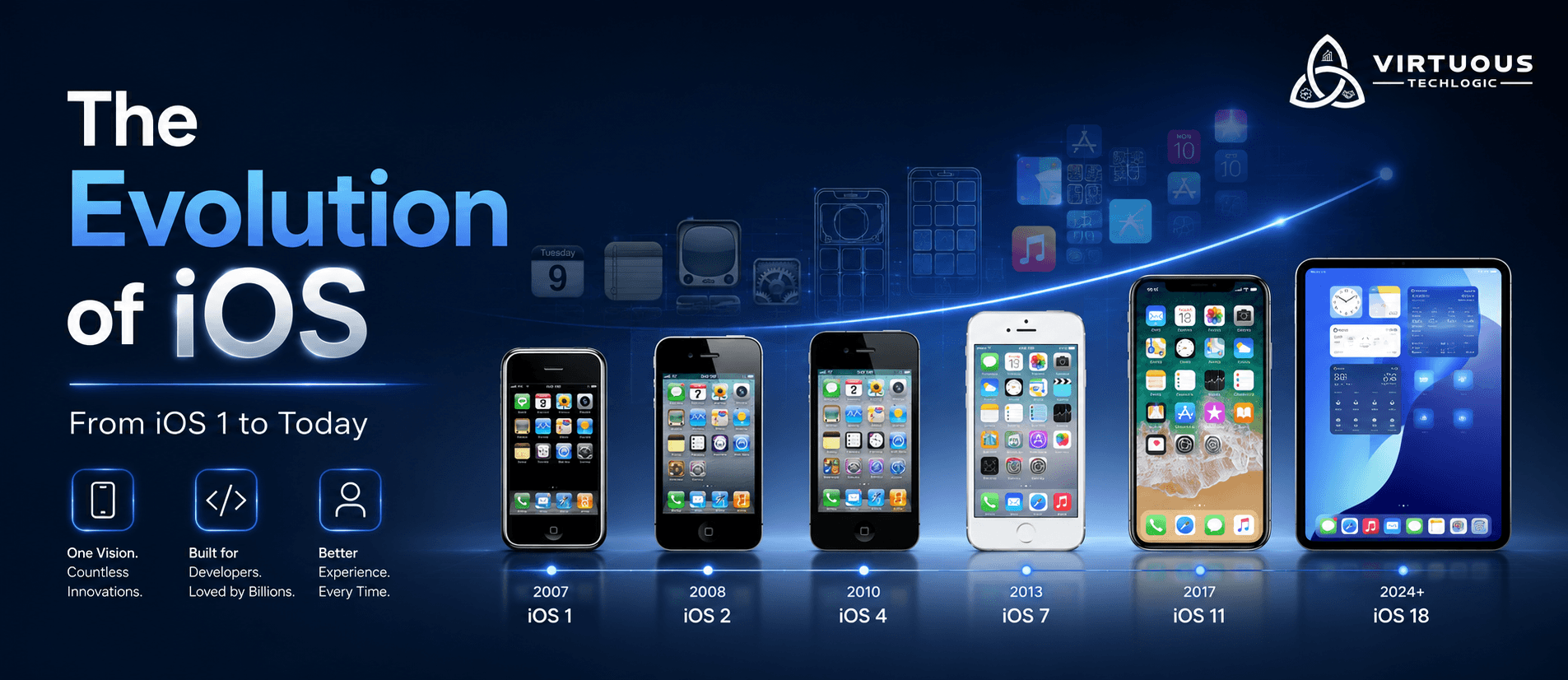
Evolution in the world of technology is inevitable, and iOS has been no exception to this rule. As Apple's flagship operating system for its iconic devices like the iPhone and iPad, iOS has undergone a remarkable journey of growth and transformation over the years. In this article, we will explore the fascinating evolution of iOS from its humble beginnings to its current state as a powerful and feature-rich platform.
Key talking points :
- Brief overview of the evolution of iOS : We will delve into the major milestones and key releases that have shaped iOS into what it is today.
- Significance of iOS in the mobile industry : iOS has played a crucial role in revolutionizing the mobile industry, setting new standards for user experience, security, and innovation.
- Impact of iOS on Apple's success : The success of Apple can be greatly attributed to the popularity and reputation of iOS as a reliable and cutting-edge operating system.
- Introduction to the topics covered in the article : We will provide an outline of the different stages of iOS evolution that will be explored in detail throughout this article.
iOS has come a long way since its inception, transforming from a simple mobile operating system into a comprehensive ecosystem that powers millions of devices worldwide. Let's explore the rich history and exciting developments that have shaped iOS into the powerhouse it is today.
The Early Years: From iOS 1 to iOS 4
During its early stages, iOS went through significant changes that formed the basis for its future growth. Here are the main milestones:
iOS 1
Introduced multi-touch gestures, changing how people interacted with smartphones. It also brought visual voicemail, a new way to manage voicemails. The addition of Safari browsing and the YouTube app made the user experience even better.
iOS 2
This version saw the launch of the App Store, which completely changed how users accessed and enjoyed digital content. The Maps app and push email feature also raised the bar for mobile navigation and communication.
iOS 3
With iOS 3, voice control and multimedia messaging became possible, making interactions more natural and expressive. The introduction of Spotlight search made it easier to find things on the device.
iOS 4
iOS 4 introduced wallpapers for the homescreen, allowing users to personalize their devices. It also brought multitasking capabilities and FaceTime, which revolutionized device usage and communication.
These innovative features not only improved user experience but also inspired other companies to innovate as well. As iOS evolved over time, these early developments laid a strong foundation for future advancements in mobile technology.
Continued Refinement: iOS 5 to iOS 8
iOS 5 brought about significant changes and introduced features that would redefine the user experience and set the stage for future innovations.
- Siri: The standout feature of iOS 5 was the introduction of Siri, Apple's virtual assistant. This marked a major leap in user interaction with mobile devices, paving the way for voice-activated commands and natural language processing.
- Notification Center : With the addition of the Notification Center, users gained a centralized hub for alerts, messages, and updates. This streamlined approach to notifications greatly enhanced user productivity and convenience.
- iMessage : iOS 5 also saw the debut of iMessage, Apple's proprietary messaging platform. This integrated messaging service provided a seamless experience for communication between Apple device users, challenging traditional SMS messaging.
Moving on to iOS 6, Apple continued its quest for refinement and innovation.
- Passbook : The introduction of Passbook revolutionized how users stored and managed tickets, boarding passes, coupons, and loyalty cards. This digital wallet feature simplified everyday tasks and laid the groundwork for future mobile payment systems.
As iOS progressed from version 5 to 8, it underwent significant refinements to meet evolving user needs and developer requirements. Each release demonstrated Apple's commitment to enhancing user experiences while providing developers with new tools and capabilities to create innovative apps.
For more details about our comapany visit our website: virtuoustechlogic.com
You can also visit Fiverr account for more details: https://www.fiverr.com/s/BRRp2j1
Frequently Asked Questions
Build Your App with Virtuous Techlogic
Book a Free ConsultationTrusted by clients across Clutch and Upwork
Want proof before starting? View our client reviews and agency profiles on Clutch and Upwork.