An organization operating with an aging software platform required a complete modernization to improve performance, scalability, usability, and long-term maintainability.
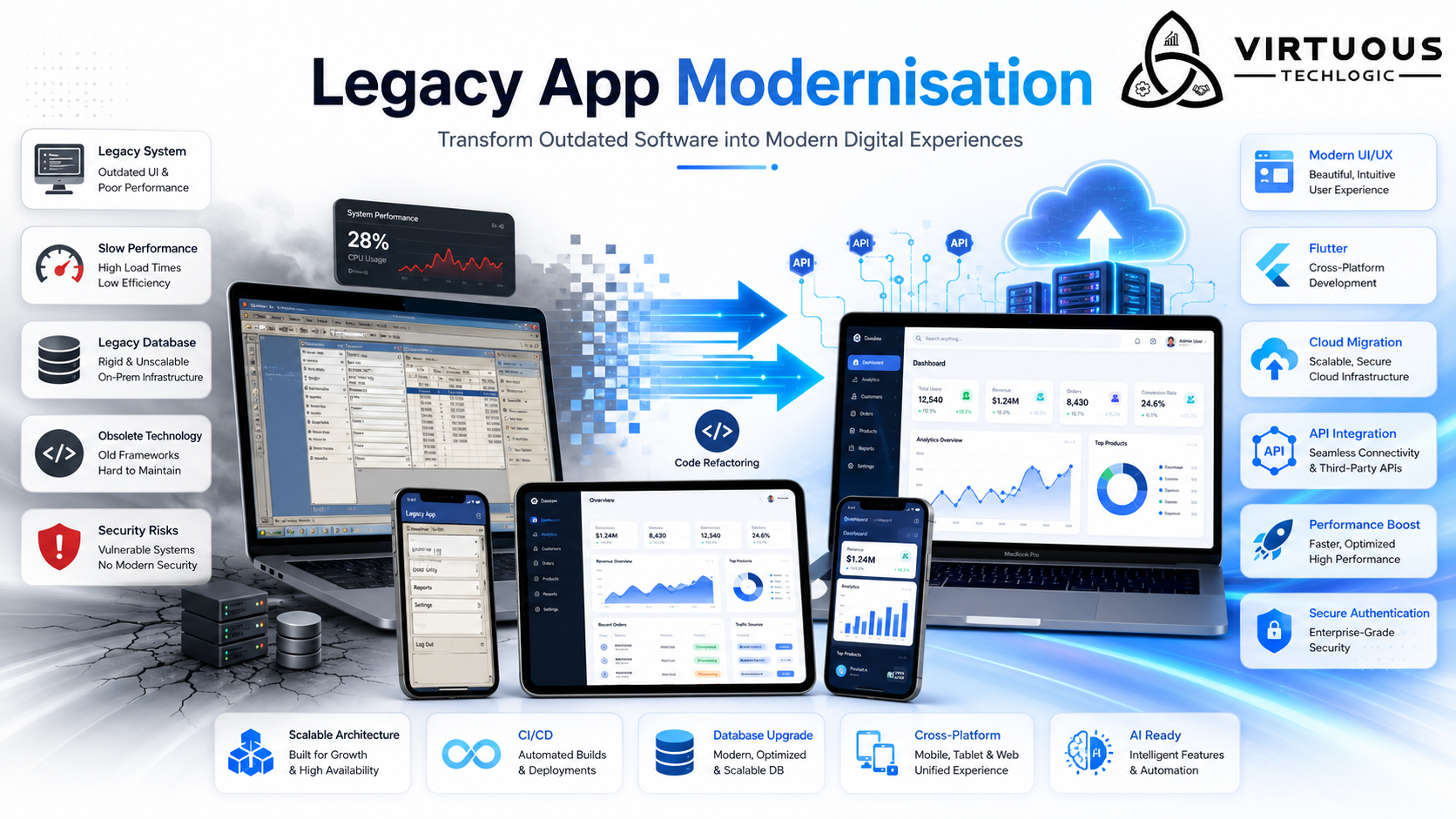
The existing application relied on outdated technologies, fragmented workflows, and limited scalability, making it increasingly difficult to support business growth and evolving user expectations.
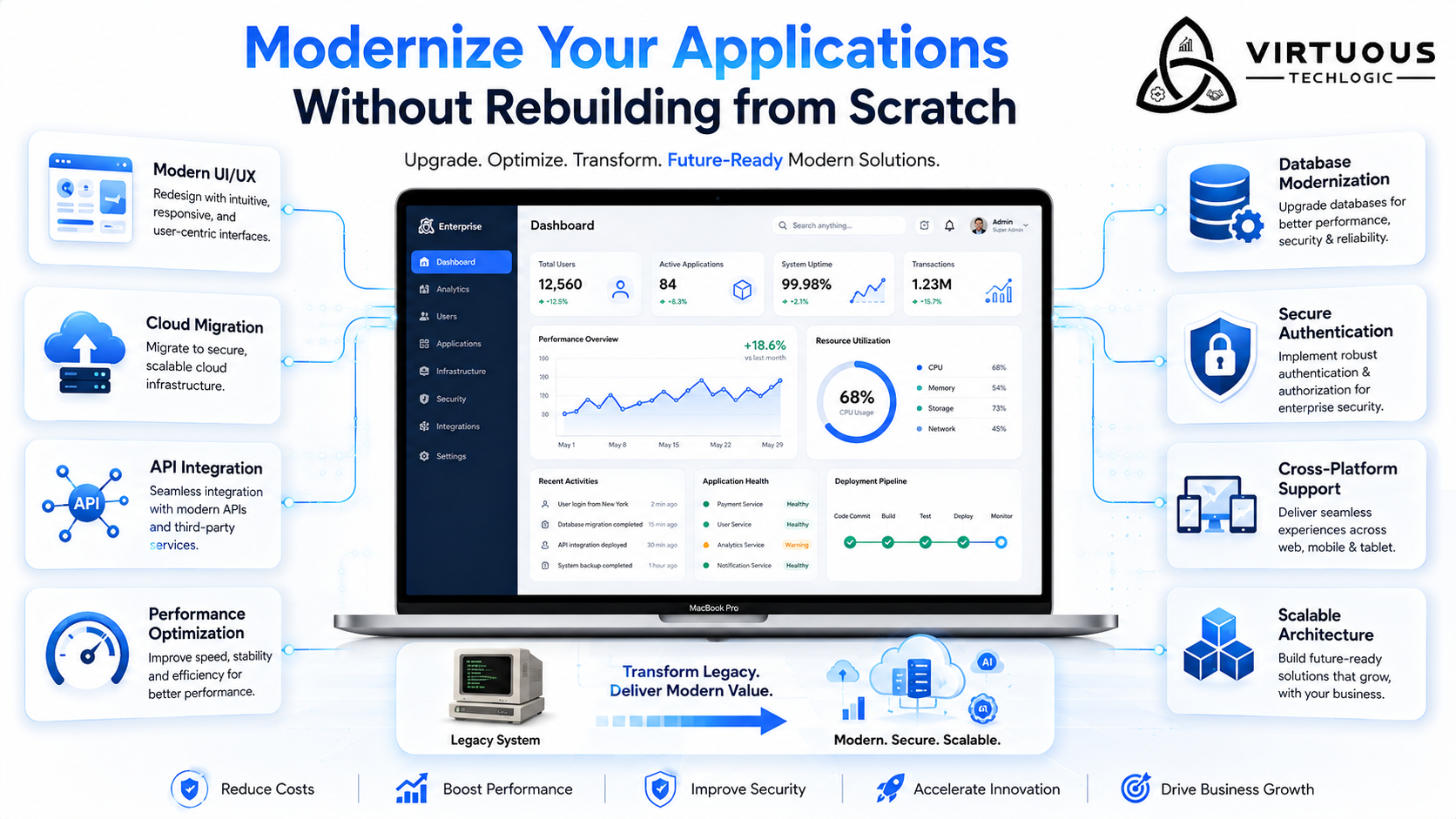
Virtuous Techlogic modernized the application by redesigning the user experience, rebuilding the platform with modern technologies, integrating cloud-based services, and creating a scalable architecture capable of supporting future business expansion.
Business Challenge
The legacy platform presented several operational and technical limitations:
- Outdated technology stack
- Slow application performance
- Poor user experience
- Limited scalability
- Difficult maintenance
- Fragmented business workflows
- Integration limitations
- Security improvements required
- Increasing technical debt
- High maintenance effort
The client required a future-ready platform capable of supporting continuous feature development while minimizing operational disruption during migration.
Our Solution
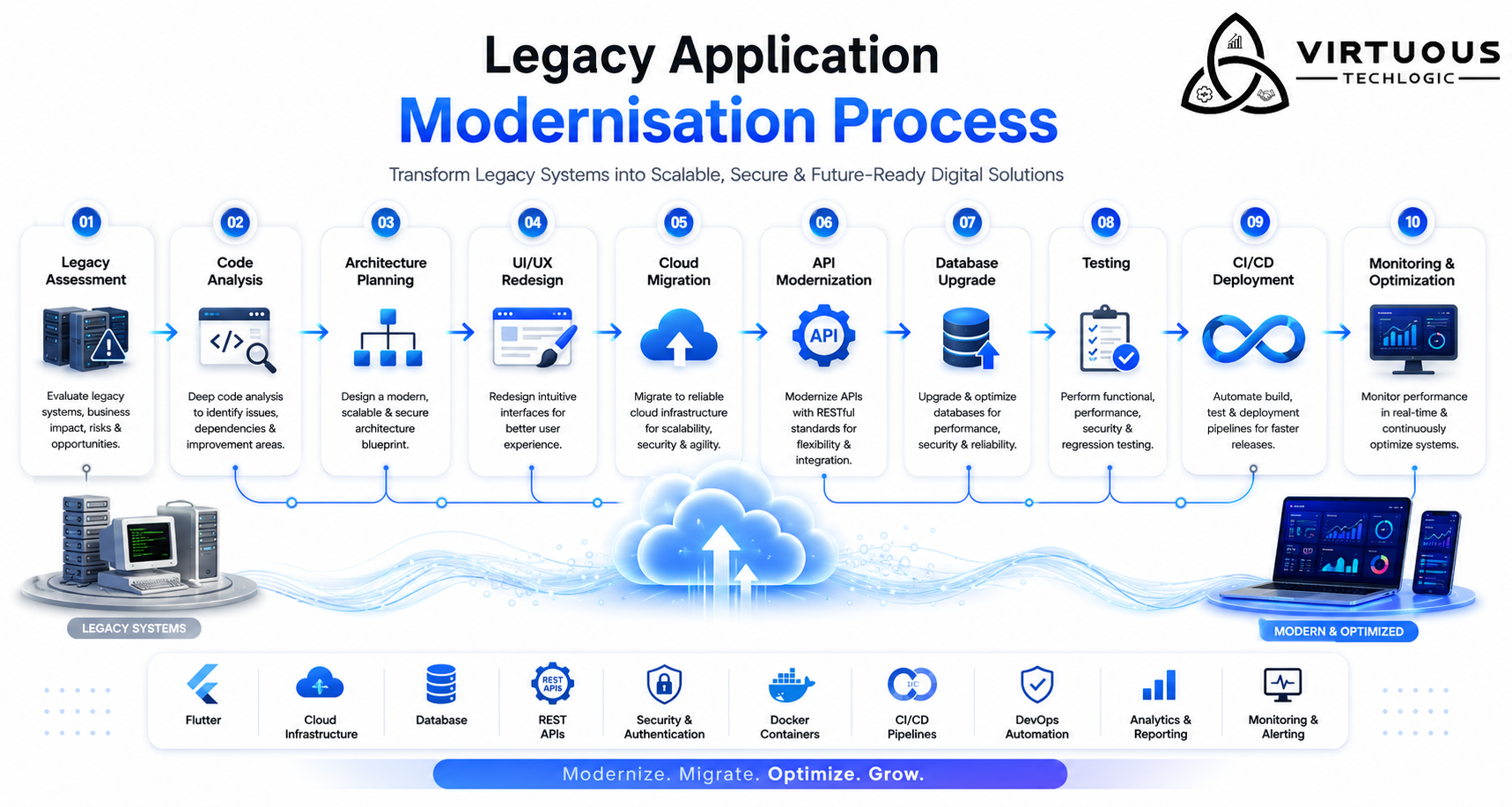
Virtuous Techlogic re-engineered the application using modern cross-platform technologies and scalable cloud infrastructure.The modernization focused on preserving essential business workflows while replacing outdated components with maintainable, secure, and scalable solutions.The project included UI/UX redesign, backend modernization, API integration, database optimization, cloud deployment, and comprehensive quality assurance to ensure a smooth transition from the legacy system.
Core Features
Modern User Experience
- Redesigned User Interface
- Responsive Layouts
- Simplified Navigation
- Improved Accessibility
- Enhanced User Flows
Modernized Business Workflows
- Digital Process Automation
- Centralized Data Management
- Workflow Optimization
- Faster User Operations
- Improved Reporting
Cloud Integration
- Cloud Database
- Secure Storage
- Real-Time Synchronization
- Backup & Recovery Support
- Scalable Infrastructure
User Management
- Secure Authentication
- Role-Based Access Control
- Profile Management
- Permission Management
- Activity Tracking
Administrative Dashboard
- User Administration
- Content Management
- Analytics Dashboard
- Operational Monitoring
- System Configuration
Technology Stack
Frontend
- Flutter
Backend
- Firebase
- REST APIs
- Cloud Functions
Database
- Cloud Firestore
Authentication
- Firebase Authentication
Cloud Infrastructure
- Firebase Cloud Services
Analytics
- Firebase Analytics
Solution Architecture
The modernized solution follows a modular, cloud-native architecture designed for long-term scalability.The architecture includes:
- Flutter Application Layer
- Authentication Service
- API Integration Layer
- Cloud Database
- Administrative Dashboard
- Notification Service
- Analytics Module
- Cloud Storage
- Secure Backend Services
This architecture enables easier maintenance, faster feature delivery, and improved scalability as business requirements evolve.
Legacy Modernization Strategy
Rather than rebuilding business processes from scratch, the modernization approach focused on preserving valuable operational workflows while replacing outdated technology components.The strategy included:
- Legacy System Assessment
- Technical Debt Analysis
- User Experience Redesign
- Incremental Migration Planning
- Backend Modernization
- API Standardization
- Database Optimization
- Cloud Migration
- Performance Improvements
- Future Scalability Planning
Security & Privacy
Security was incorporated throughout the modernization process to strengthen platform resilience and protect business data.Key implementation areas included:
- Secure User Authentication
- Role-Based Access Control (RBAC)
- HTTPS/TLS Encrypted Communication
- Protected API Endpoints
- Secure Cloud Storage
- Session Management
- Activity Logging
- Controlled Administrative Access
- Data Backup Strategies
- Secure Configuration Management
Compliance Considerations
The application modernization followed security and privacy best practices suitable for enterprise software modernization projects.Implementation considered:
- Secure authentication workflows
- Role-based authorization
- Encrypted data transmission
- Secure API communication
- Privacy-aware data handling
- Audit-friendly architecture
- Cloud security practices
- Data minimization principles
Compliance Note: Regulatory compliance (including GDPR, HIPAA, SOC 2, ISO 27001, or industry-specific standards) depends on the production infrastructure, deployment environment, operational policies, legal agreements, and client-specific governance. Compliance certification was outside the scope of this modernization project.
Quality Assurance
A structured quality assurance process helped validate functionality and minimize migration risks.Testing included:
- Functional Testing
- Regression Testing
- Cross-Platform Testing
- Performance Testing
- API Testing
- Authentication Testing
- User Acceptance Support
- Compatibility Testing
- Security Validation
- Bug Resolution
Technical Challenges Solved
Key modernization challenges addressed during the project included:
- Migrating from outdated technologies
- Preserving existing business workflows
- Reducing technical debt
- Improving application responsiveness
- Optimizing backend performance
- Standardizing API communication
- Modernizing the user interface
- Supporting scalable cloud infrastructure
- Improving maintainability
- Preparing the platform for future enhancements
Why Flutter for Modernization?
Flutter was selected to accelerate modernization while supporting multiple platforms from a single codebase.Benefits included:
- Cross-platform development
- Faster delivery cycles
- Consistent UI across devices
- Easier maintenance
- Improved performance
- Lower long-term development effort
- Scalable architecture
- Simplified future feature expansion
Business Value Delivered
The modernized platform provides a scalable digital foundation that enables organizations to replace aging software with a maintainable, cloud-ready solution.The delivered platform supports:
- Improved operational efficiency
- Modern user experience
- Centralized administration
- Scalable cloud infrastructure
- Easier maintenance
- Enhanced security practices
- Future technology integrations
- Long-term product evolution
Business performance metrics remain client-specific and are not publicly disclosed.
Ideal Use Cases
This modernization approach is suitable for:
- Enterprise Applications
- Internal Business Systems
- Legacy ERP Platforms
- Operational Management Systems
- Customer Portals
- Healthcare Software
- Financial Applications
- Manufacturing Platforms
- Logistics Systems
- SaaS Product Modernization
Frequently Asked Questions
What is legacy application modernization?
Legacy application modernization involves upgrading outdated software with modern technologies, improved architecture, enhanced security, and better user experiences while preserving valuable business functionality.
When should a business modernize a legacy application?
Organizations should consider modernization when legacy systems become difficult to maintain, limit scalability, create security concerns, or no longer meet evolving business requirements.
Can existing business data be preserved during modernization?
Yes. Migration strategies can be planned to retain existing business data while transitioning to modern platforms with minimal operational disruption.
Why use Flutter for legacy modernization?
Flutter enables organizations to modernize applications efficiently by supporting multiple platforms from a single codebase while improving maintainability and user experience.
Can new features be added after modernization?
Yes. The modular architecture is designed to support future integrations, AI capabilities, automation, analytics, and additional business workflows.
How is security addressed during modernization?
The platform incorporates secure authentication, encrypted communications, role-based access, secure cloud infrastructure, and privacy-focused development practices. Specific compliance requirements depend on the final deployment environment and organizational policies.
Related Services
- Legacy Application Modernization
- Mobile App Development
- Flutter App Development
- Enterprise Software Development
- Cloud Application Development
- Backend Development
- UI/UX Modernization
- API Integration Services
- Digital Transformation Consulting
Call to Action
Modernize Your Legacy Software with Virtuous Techlogic
Whether you're replacing outdated enterprise software, upgrading an internal business application, or transforming a legacy platform into a scalable cloud-based solution, Virtuous Techlogic can help you modernize with minimal disruption and a future-ready architecture.Book a free consultation to discuss your legacy application modernization project.