Loading page content

A practical architecture separates system-of-record boundaries, identity/authorization, ingestion adapters, event normalization, policy engines, queues, workflow orchestration, optional AI extraction/classification, human review, escalation, notifications, audit events, observability, and failure recovery. Risk profiles differ sharply between non-clinical claim document validation and critical-result acknowledgement. This guide explains both.
By Himanshu Viroja
Publisher: Virtuous Techlogic · Published October 9, 2026 · Last reviewed October 9, 2026
Trusted by clients across Clutch and Upwork
Want proof before starting? View our client reviews and agency profiles on Clutch and Upwork.
You need an architecture narrative stakeholders can evaluate before funding a build.
A structured delivery path—not vague promises.
Decide what may be written vs read.
Adapters → normalize → policy → queue → orchestrate.
Extraction/classification behind validation and human review.
Balanced guidance—not one-size-fits-all answers.
Share adapters and audit plumbing, but isolate clinical safety workflows with stricter change control and clinical validation.
Proof aligned to this topic—not generic filler.
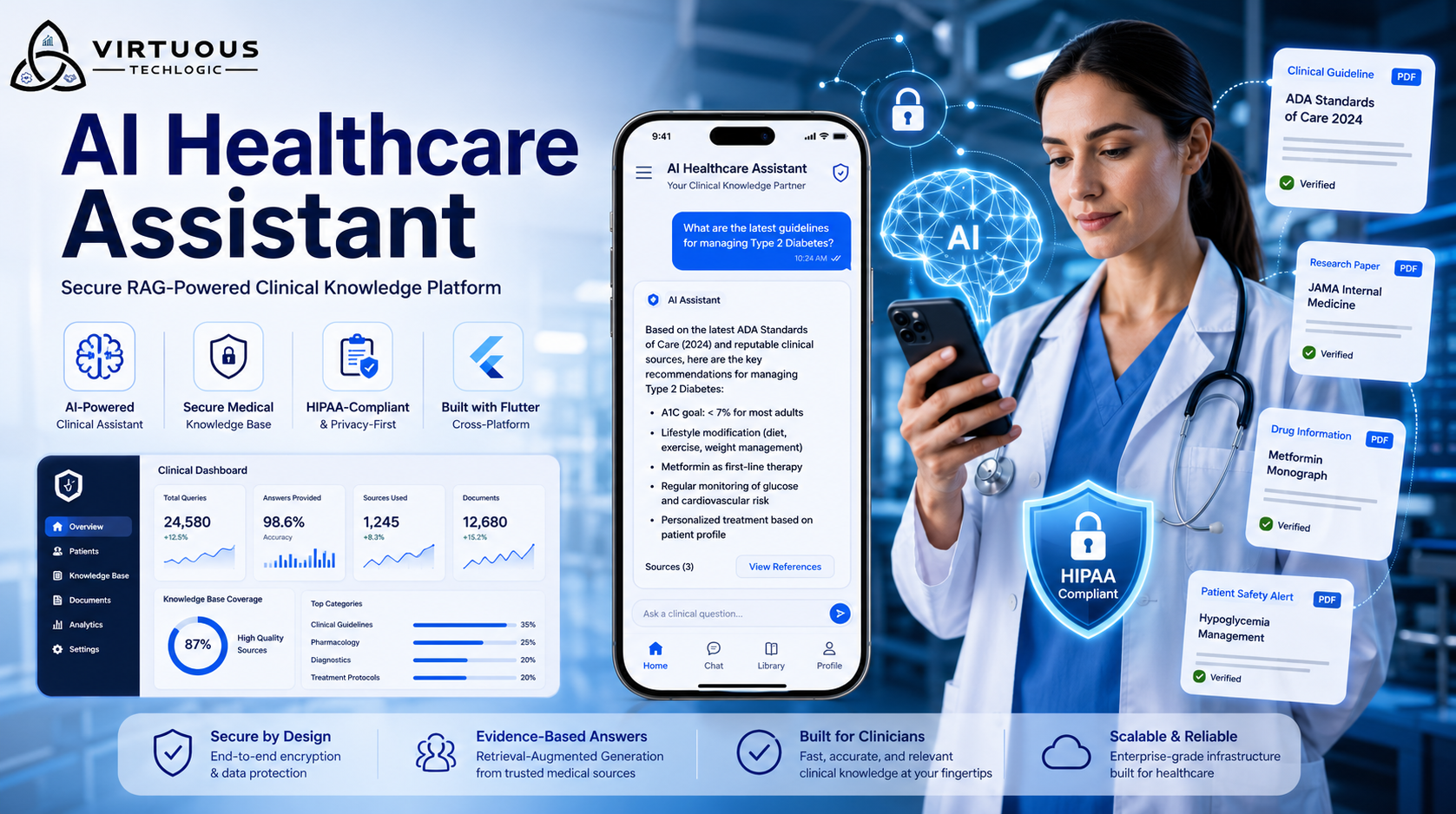
Healthcare professionals often spend valuable time searching through fragmented documentation, treatment protocols, operational guidelines, and internal...
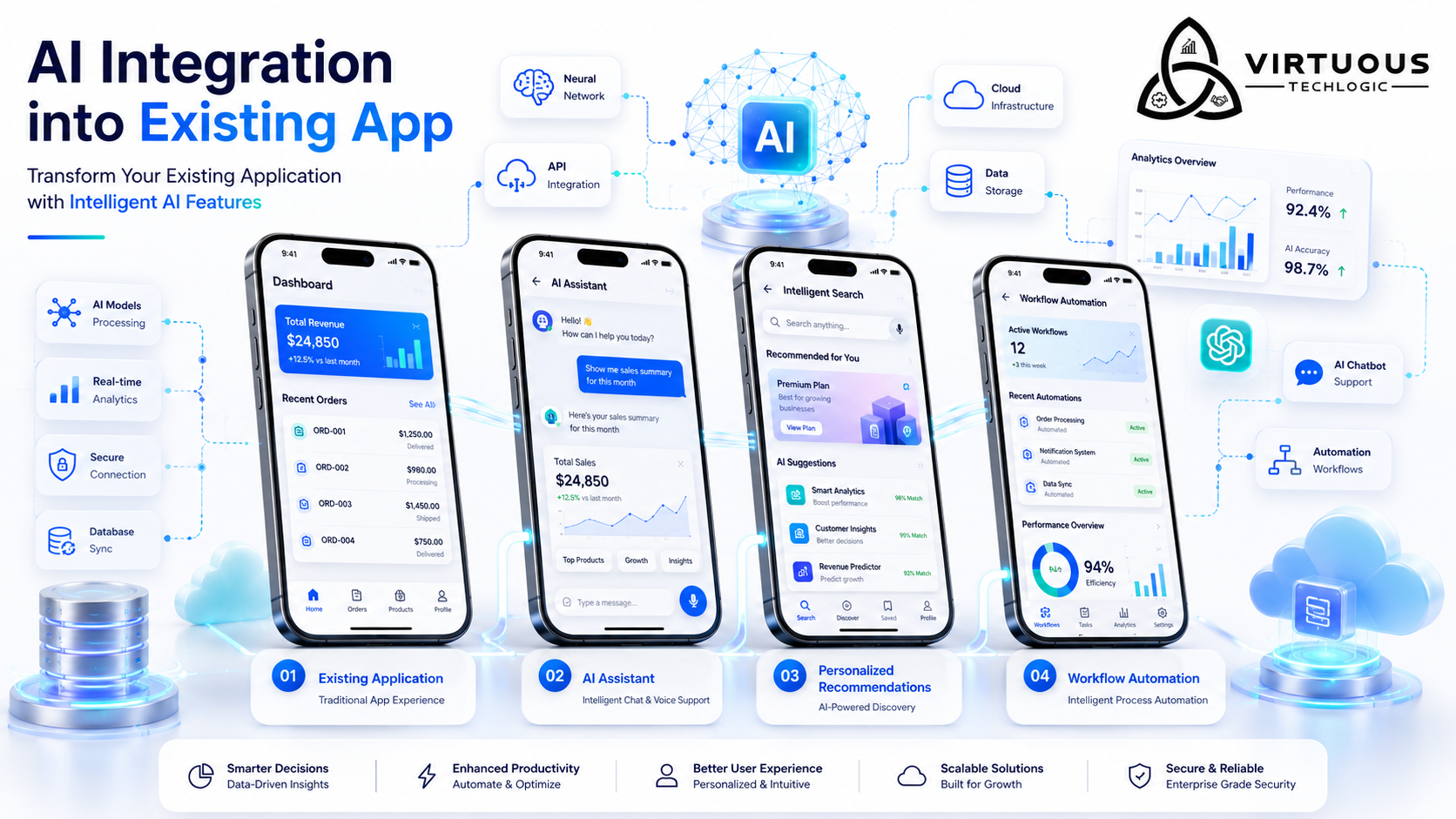
Industry Business Applications Modernizing existing mobile applications with intelligent AI capabilities.
Primary capability pages for this topic.
Custom healthcare workflow automation around existing EHR, lab, billing, and portal systems—event orchestration, human-in-the-loop controls, audit trails, and responsible AI where it helps.
Printable evaluation checklist for healthcare CTOs, CIOs, and procurement: discovery, FHIR/HL7, PHI, BAA, audit logging, human oversight, failure recovery, acceptance criteria, and maintenance.
Define task volumes, error/rework, labor effort, cycle time, escalation latency, financial recovery, and total cost of automation—with clear formulas and a labeled hypothetical illustration.
Integrate AI into existing healthcare mobile apps, patient portals, and care-management platforms—with permissions, human review, auditability, and clinical boundaries.
Closed-loop follow-up for abnormal and critical results: ingestion, identity matching, ownership, acknowledgement, escalation, and audit evidence—configured with authorized clinical policies, not AI urgency judgments.
It is a reference architecture for custom builds and integrations—not a packaged EHR.
Claim document validation and critical-result acknowledgement share plumbing but differ in clinical risk, validation owners, and acceptable AI use.
UI for staff acknowledgement or coordinator queues can be Flutter/web; orchestration and authorization stay on the backend.
RAG assistants retrieve knowledge. This architecture orchestrates operational work across systems. Many programs need both, scoped separately.