Healthcare software we actually engineer
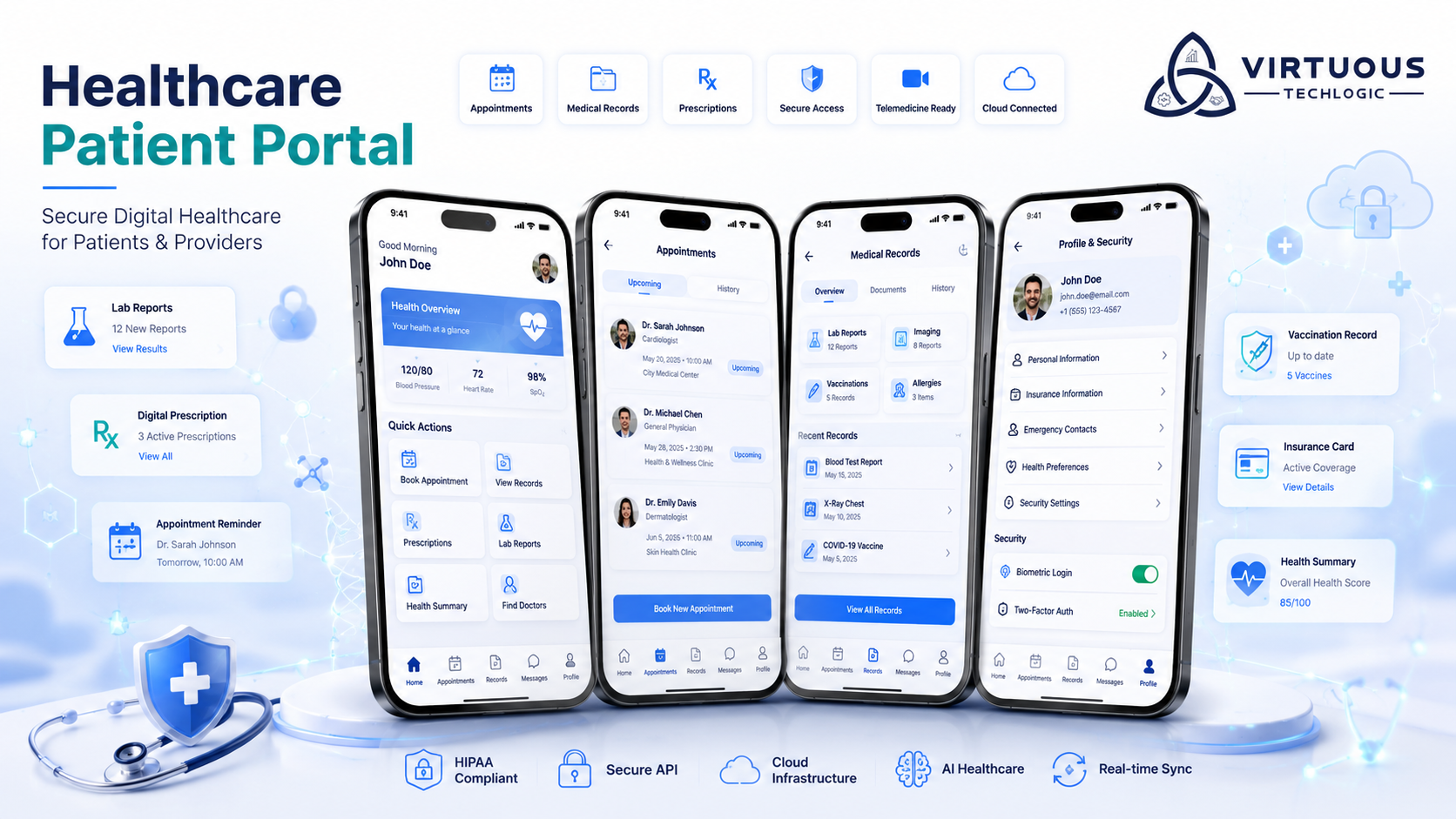
We partner with healthcare startups, founders, CTOs, clinics, digital health companies, and healthcare SaaS teams. Typical work includes patient and caregiver apps, provider portals, medication and appointment workflows, telehealth-style consultation flows, and staff knowledge tools. We design HIPAA-aware architectures: authentication, role-based access, encryption in transit and at rest, audit logging, and minimum-necessary access. We do not issue a HIPAA certificate and do not claim a blanket company certification. On some completed projects, that product went through HIPAA compliance certification. The certificate belongs to the engagement, not to the company as a standing credential. Consumer fitness, wellness, and coaching products are documented on the Fitness & Wellness industry page—not as clinical software.
Business problems we solve
Buyers typically come to us for patient and provider experience gaps, legacy system integration, administrative workflow inefficiency, data security and auditability, AI integration into existing healthcare software, and operational reliability after launch. We prefer scoped pilots and clear milestones over open-ended rebuilds.
Operations automation and human error prevention
Many operational failures happen between EHR, lab, billing, and portal systems: missed follow-ups, referral leakage, authorization delays, claim rework, and unclear task ownership. We build modular workflow automation—ownership, acknowledgement, escalation, and audit trails—around systems you already run. See Healthcare Workflow Automation for the commercial hub, with specialized paths for claim denial prevention, prior authorization, critical results, referrals/discharge, and clinical handoffs.
Technical architecture: Flutter, APIs, RBAC, FHIR, and RAG
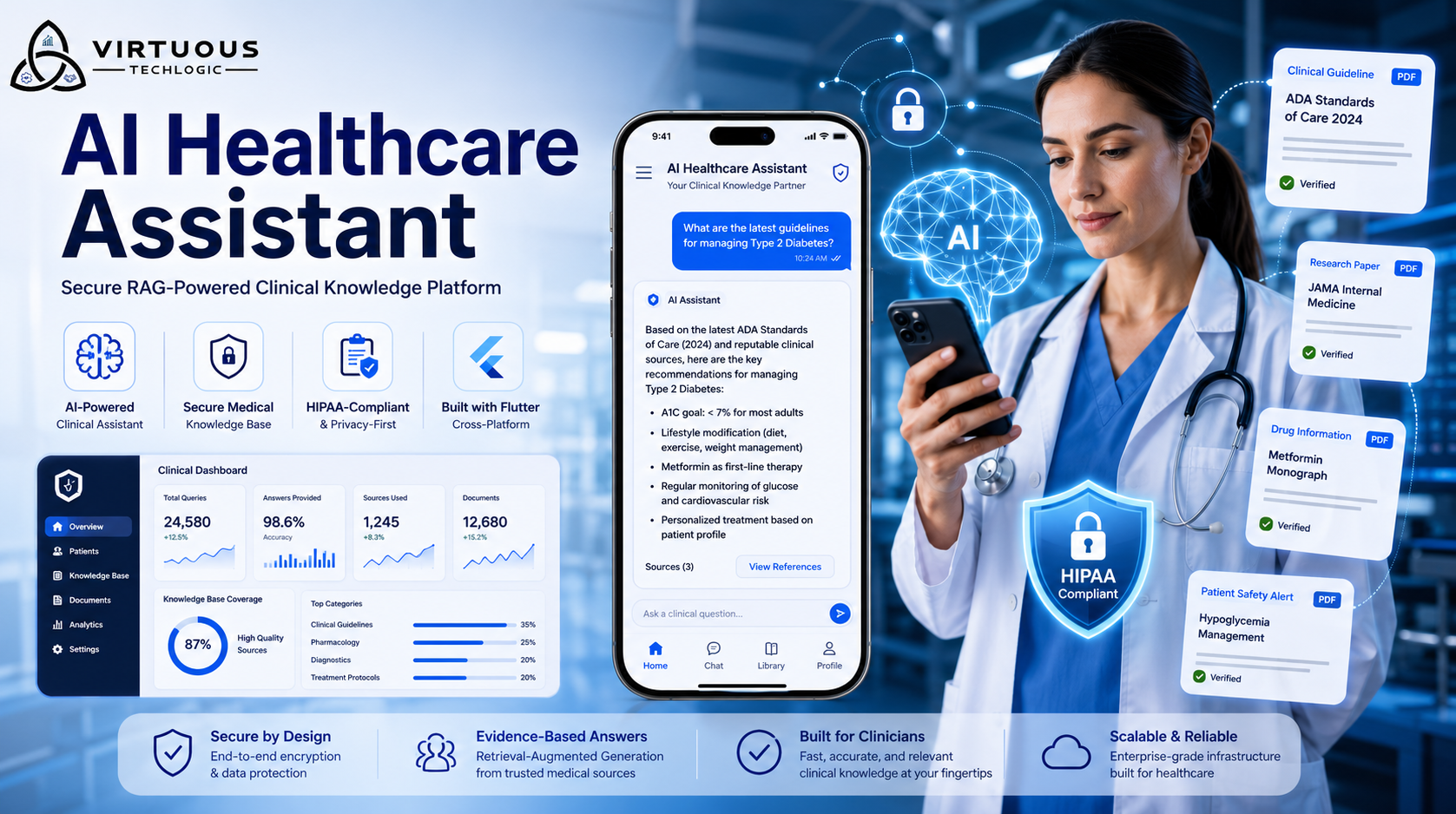
Cross-platform Flutter and FlutterFlow where they fit; secure backend and API design; authentication, authorization, and RBAC; EHR/FHIR integration scoped to specific resources and write-back rules; permission-aware RAG with human review for care-adjacent output; data protection, monitoring, and failure recovery. FHIR and EHR work is scoped to identity mapping and vendor capabilities—integration depth usually drives timeline more than UI polish.
Healthcare AI, RAG, and clinical knowledge
AI in healthcare products is scoped to approved data sources. Administrative and wellness assistants differ from anything that could influence clinical decisions—those paths need human review. RAG over clinical or operational knowledge uses permission filters so retrieval cannot leak another role's records. Prompts and logs are designed to avoid storing unnecessary PHI. Knowledge assistants are distinct from workflow orchestration—link both when your product needs them.
Quality, delivery, and existing products
Discovery and architecture planning, UI/UX prototyping, iterative engineering with milestones, unit/integration/end-to-end testing, security and performance checks, UAT and documentation, then launch support and ongoing improvements. We can add AI to a live healthcare application, work with your current APIs, or plan a focused MVP. Building a consumer fitness or wellness platform instead? Explore Fitness & Wellness app development.