Loading page content

Most healthcare organizations already run EHRs, laboratory systems, scheduling, billing, and patient portals. Critical work still falls between systems because of manual entry, unclear ownership, unacknowledged results, incomplete referrals, authorization delays, and fragile integrations. Virtuous Techlogic designs modular workflow extensions and integrations around those systems: event → validation → normalization → ownership → action → acknowledgement → escalation → audit trail—with human-in-the-loop controls where risk requires it.
Trusted by clients across Clutch and Upwork
Want proof before starting? View our client reviews and agency profiles on Clutch and Upwork.
You need measurable operational reliability across existing clinical and administrative systems—not another disconnected chatbot or a full EHR rip-and-replace.
A structured delivery path—not vague promises.
Map events, owners, systems of record, failure modes, and which decisions must stay human-controlled.
Define adapters, identity matching approach, retry/idempotency rules, and audit requirements before build.
Ship one high-value workflow with monitoring, exception queues, and rollback criteria.
Add workflows, tighten SLAs, expand AI only where evaluation and review gates exist.
Balanced guidance—not one-size-fits-all answers.
Extending existing EHR/HIS/billing platforms usually delivers value faster and preserves operational familiarity. Replacement may be justified for unmaintainable cores—but it is a different program with different risk.
Rules and state machines are predictable and auditable for eligibility, timers, and routing. AI helps with messy documents and triage—but needs evaluation, permissions, and human gates.
Alerts without ownership, acknowledgement, and escalation create alert fatigue. Durable tasks with evidence of completion are the operational target.
Proof aligned to this topic—not generic filler.
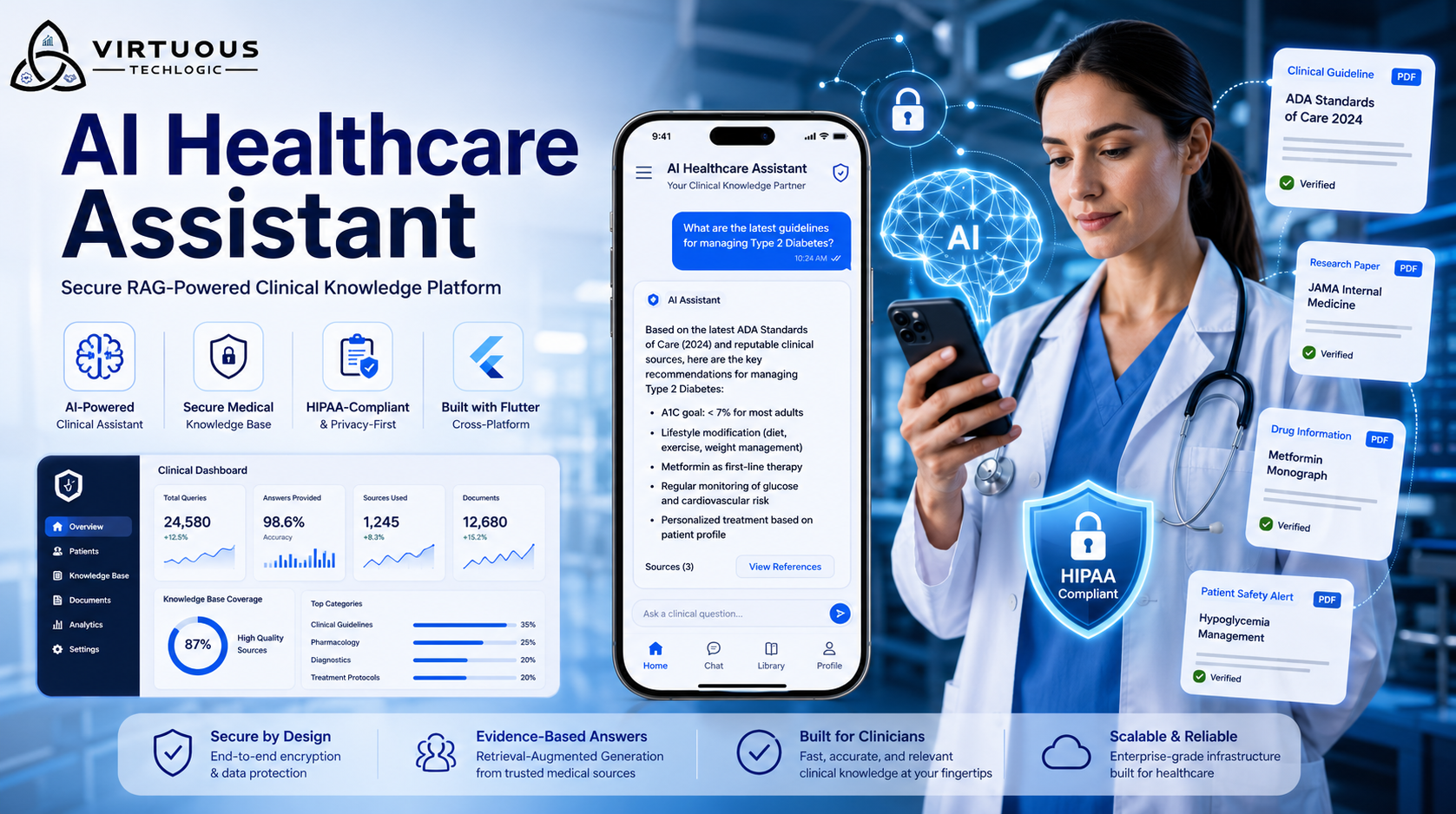
Healthcare professionals often spend valuable time searching through fragmented documentation, treatment protocols, operational guidelines, and internal...
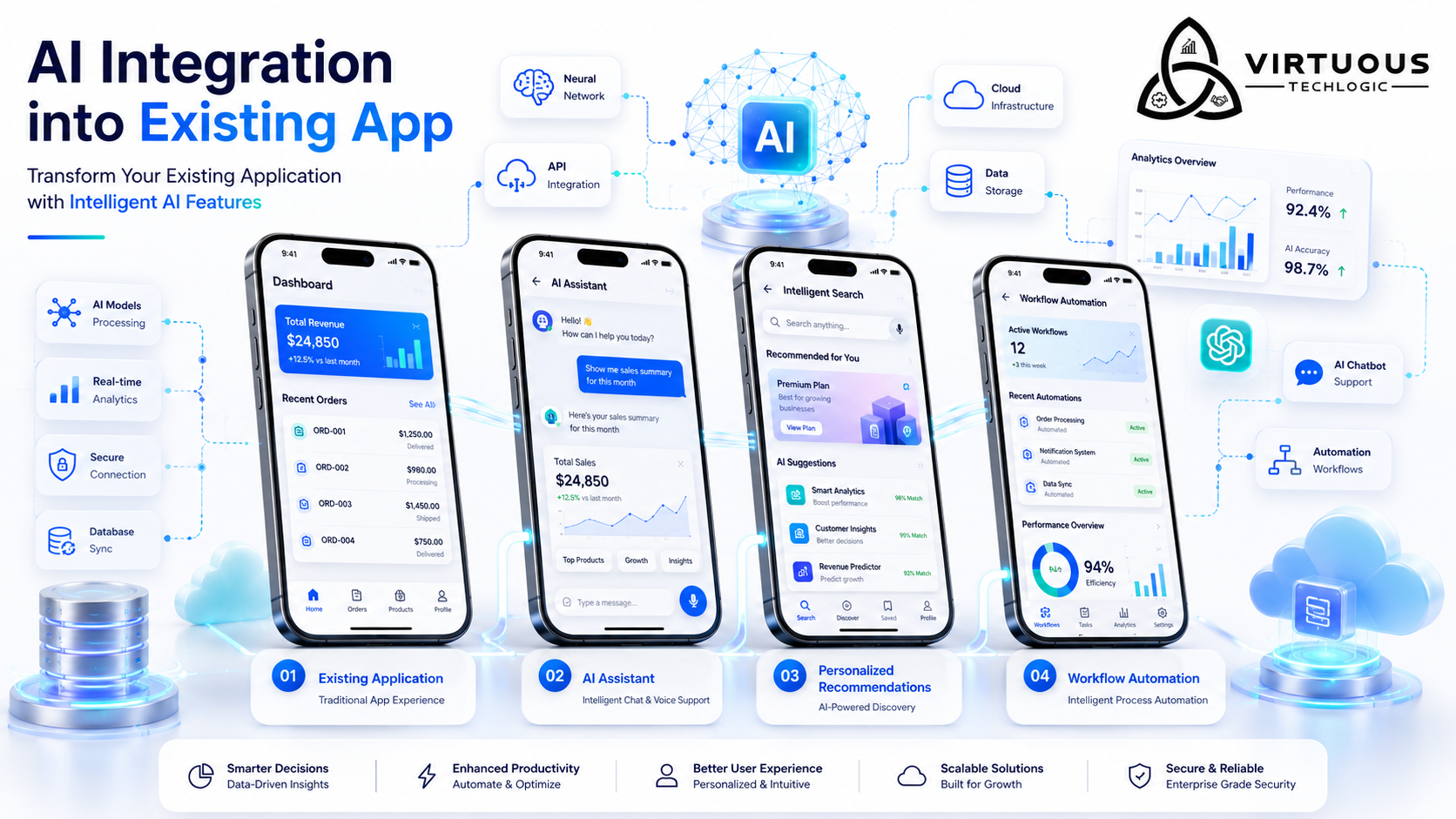
Industry Business Applications Modernizing existing mobile applications with intelligent AI capabilities.
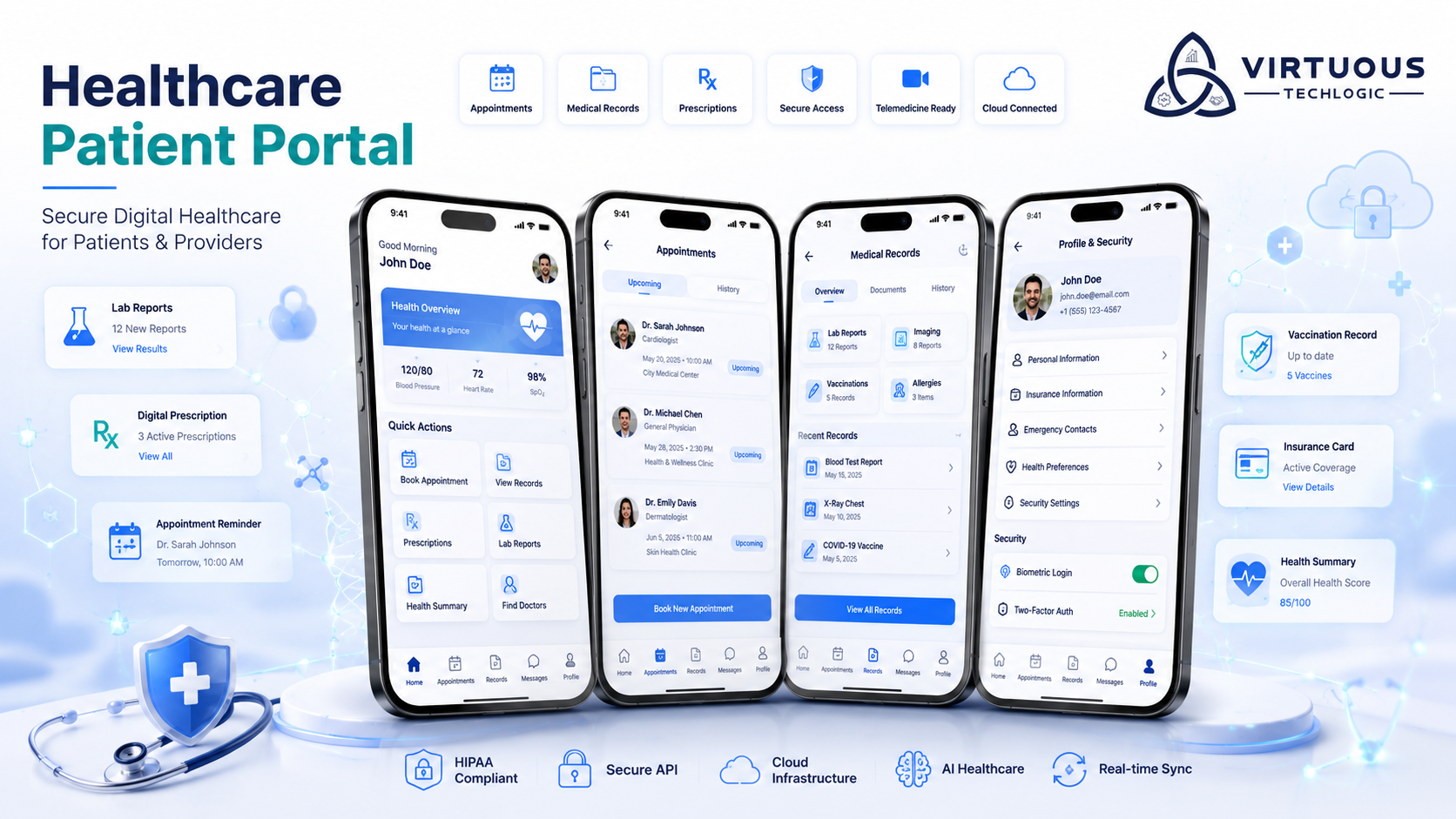
Introduction Healthcare providers are increasingly expected to offer digital experiences that extend beyond in-person consultations. Patients want convenient...
Primary capability pages for this topic.
Provider-side revenue cycle automation: eligibility, authorization checks, documentation completeness, pre-submission validation, denial queues, and clearinghouse integrations—built around systems you already use.
Prior authorization case workflows: coverage checks, document mapping, human review, status visibility, escalation, and payer integrations—including FHIR-oriented patterns where available and X12 278 where applicable.
Closed-loop follow-up for abnormal and critical results: ingestion, identity matching, ownership, acknowledgement, escalation, and audit evidence—configured with authorized clinical policies, not AI urgency judgments.
Closed-loop referral and post-discharge follow-up: booking, status, no-shows, pending tests, ownership, patient communication consent, and escalation—integrated with care coordination workflows.
Clinical and operational task orchestration: ownership, shift handoffs, escalation ladders, concurrency control, and immutable audit history—explicitly separate from diagnosis or treatment recommendations.
No. This solution is designed to integrate with systems you already operate. Replacement is only considered when the current platform cannot support required controls—and that is scoped separately.
AI is strongest for extraction, classification hints, summarization, and administrative triage—behind deterministic validation and human review. It should not independently decide clinical urgency or finalize safety-critical actions.
The Healthcare AI Assistant focuses on RAG and knowledge assistants inside products. This page focuses on operational workflow orchestration—ownership, acknowledgement, escalation, and integration reliability across systems.
A lightweight software feasibility review: target workflows, systems involved, integration paths, risk boundaries, and indicative phases. It is not a formal clinical safety audit or certification.
Yes when access and contracts allow. Capabilities differ by EHR vendor and environment. We design for explicit resources/messages, identity rules, retries, and reconciliation—not assumed universal APIs.
Define denominators with your operations team: acknowledgement latency, unresolved backlog, clean-claim rate, referral completion, escalation SLA adherence, and rework hours. We avoid invented ROI percentages.